

Women juggle a lot: oil changes, kids’ appointments, vet visits, work deadlines. Our own health often slides down the list.
October is Breast Cancer Awareness Month, a perfect time to move breast health back up. Mammograms are a key part of breast cancer screening, but caring for your breasts is more than one appointment. It means knowing what’s normal for you, understanding your breast cancer risk, recognizing changes, and knowing when something deserves a closer look.
1. Know What Is Normal for You
You don’t need to constantly check your breasts or worry about every minor change. But having a general sense of your normal helps you notice when something is different.
Breasts naturally change over time. Hormones, age, pregnancy, weight changes, and other factors can affect how they look and feel. The important thing is spotting a new or unusual change that doesn’t seem normal to you. Common signs of breast cancer to watch include:
- A new lump in the breast or underarm
(painless lumps can be a sign of breast cancer) - Swelling or thickening in part of the breast
- A change in the size or shape of the breast
- Skin dimpling, irritation, redness or flaking
(skin changes can be signs of breast cancer) - A nipple that turns inward when it normally doesn’t, crusting, scaling or a rash on the nipple
- Unusual nipple discharge, especially if it is bloody
- Persistent pain or discomfort in one area
Many of these changes have causes that are not cancer. Noticing a change doesn’t mean something is wrong; it means it’s worth talking with a healthcare provider. Understanding breast pain causes is important, too: cyclical hormonal changes, cysts, infections and body pain are common breast pain causes that are not cancer. Still, new, localized pain deserves attention, as it can overlap with signs of breast cancer.
Did you know? Breast cancer does not always cause lumps or obvious symptoms. That’s one reason recommended breast cancer screening matters. A mammogram can find some breast cancer before they’re large enough to feel or cause symptoms, supporting overall breast health.

2. Know Your Breast Cancer Risk
Family history is an important breast cancer risk factor, but it’s only one piece of the puzzle.
Having a mother, sister, or daughter with breast cancer can increase your risk. Certain inherited gene changes, including BRCA1 and BRCA2, also increase risk. Age, personal health history, dense breasts, and other factors play a role.
At the same time, many people who develop breast cancer do not have a known family history or obvious risk factors.
That’s why talking with your healthcare provider about your personal breast cancer risk is helpful. Don’t assume you’re “high risk” or “low risk” without an individualized assessment.
If you have a strong family history, dense breasts or other risk factors, your provider can help determine whether you may benefit from a different screening approach or additional evaluation that supports your breast health and timely breast cancer screening.
What About Dense Breasts?
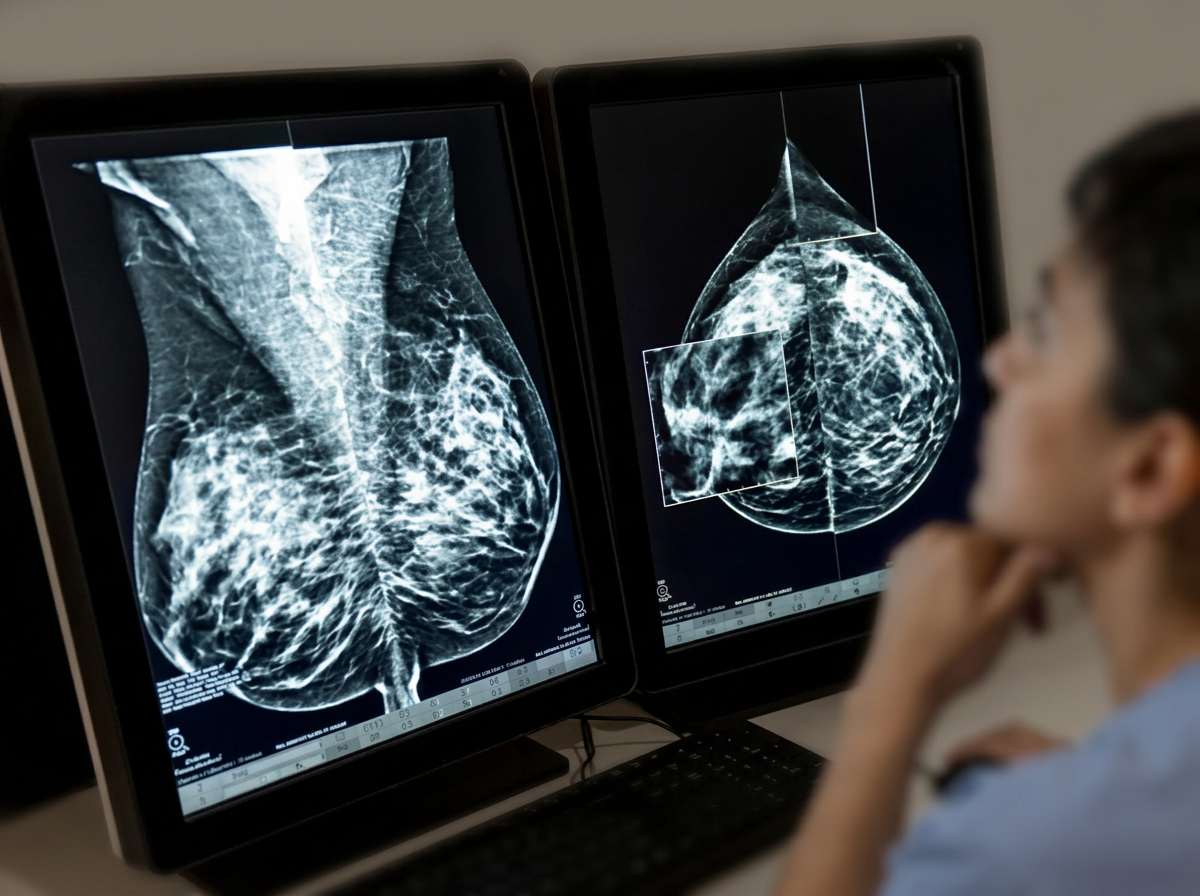
You may see “dense breasts” on a mammogram report. Breast density describes the amount of fibrous and glandular tissue compared with fatty tissue.
Density matters because dense tissue appears white on a mammogram, and some breast abnormalities, including cancers, can also appear white. It’s like trying to spot a white object against a white background, which can make abnormalities harder to see.
Having dense breasts does not mean you have cancer, but dense breast tissue can increase breast cancer risk and may make some cancers harder to detect on a mammogram. If your report indicates dense breasts, talk with your healthcare provider about what that means for you and whether additional breast cancer screening is appropriate based on your personal risk factors.
3. Why Finding Breast Cancer Early Matters
Here’s a number worth remembering:
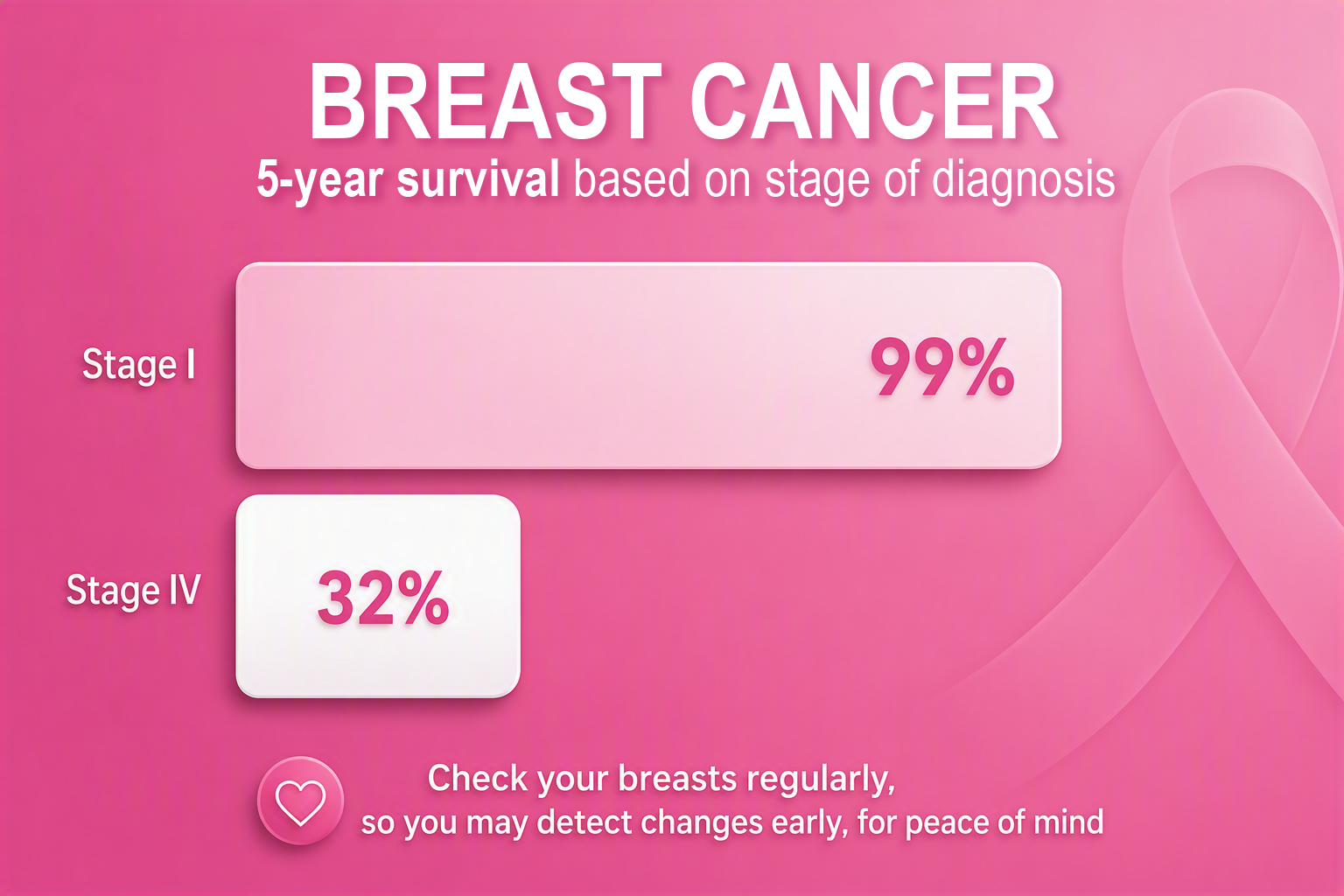
More than 99%.
That’s the 5-year relative survival rate for women diagnosed with breast cancer that has not spread outside the breast, according to the American Cancer Society. When breast cancer has spread to nearby structures or lymph nodes, the survival rate is about 87%. When it has spread to distant parts of the body, the rate is about 32%.
These numbers don’t predict outcomes for anyone. Breast cancer is not a single disease, and factors such as the type and stage of cancer, tumor characteristics, overall health and response to treatment all influence an individual’s outlook.
But the difference underscores why early detection matters.
Finding breast cancer before it spreads can mean more treatment options and a better chance of a favorable outcome. Screening can help find breast cancer earlier, sometimes before there are symptoms or outward signs of breast cancer. Early breast cancer screening supports better breast health over a lifetime.

4. Make Breast Cancer Screening Easier to Remember
For women at average risk, the U.S. Preventive Services Task Force recommends screening mammograms every other year from ages 40 through 74. Recommendations can differ for women at higher risk, so your healthcare provider can help determine the screening schedule that’s right for you.
Knowing you should get a mammogram and remembering to schedule one are two different things. Life gets busy. These simple habits can help:
Schedule before you leave. If your provider recommends another mammogram, schedule it before you leave the office whenever possible.
Give yourself a reminder. After your exam, set up a phone reminder for about two months before your next screening. When it pops up, make the call and get your mammogram on the calendar. It’s an easy way to prevent another busy year from slipping by.
Tie it to what you already remember. Your birthday month, annual physical or another yearly event can become your cue for preventive care.
Keep your health information together. Know your family history and share it with your provider. If you’ve had mammograms elsewhere, let your current team know so previous images can be available for comparison.
Don’t wait if something to change. A screening mammogram is intended for people without symptoms. If you notice a new lump (even if painless), nipple discharge, skin changes or another unusual change, contact your healthcare provider rather than waiting. These can be signs of breast cancer, including nipple changes like inversion or scaling, and skin changes like dimpling or redness.
What If Your Mammogram Is Abnormal?
Hearing an “abnormal mammogram” can be scary, but an abnormal result does not automatically mean you have breast cancer.
Additional mammograms, ultrasound, or other tests may be recommended to get a better look. An additional test is not a diagnosis; it’s a step toward clarity.
When Should You Talk with a Healthcare Provider?
If you notice a new breast lump, unexplained swelling, nipple or skin changes, unusual nipple discharge or another change that concerns you, make an appointment with your healthcare provider. If you’ve fallen behind on recommended breast cancer screening, that’s worth addressing too.
At Sidney Regional Medical Center, your healthcare team can help answer questions about breast health, personal risk and recommended preventive care, and determine what steps may be appropriate for you. Reviewing common signs of breast cancer, discussing breast pain causes, and staying on schedule with breast cancer screening can help you act promptly if something changes.
Your Health Is Worth the Appointment
We spend a lot of time taking care of the people, animals, homes, and responsibilities that depend on us. We are worth taking care of, too.
Know what is normal for you. Know your risks. Keep up with the recommended screening. And if something changes, don’t put it off getting checked. Paying attention to the signs of breast cancer and maintaining your breast health can make a real difference.
Your health is worth it.